Flight Centre Travel Group (FCTG) has spent decades learning to move fast in a volatile industry. The question its product and technology teams faced was a newer one: how do you let AI accelerate the work without scattering it?
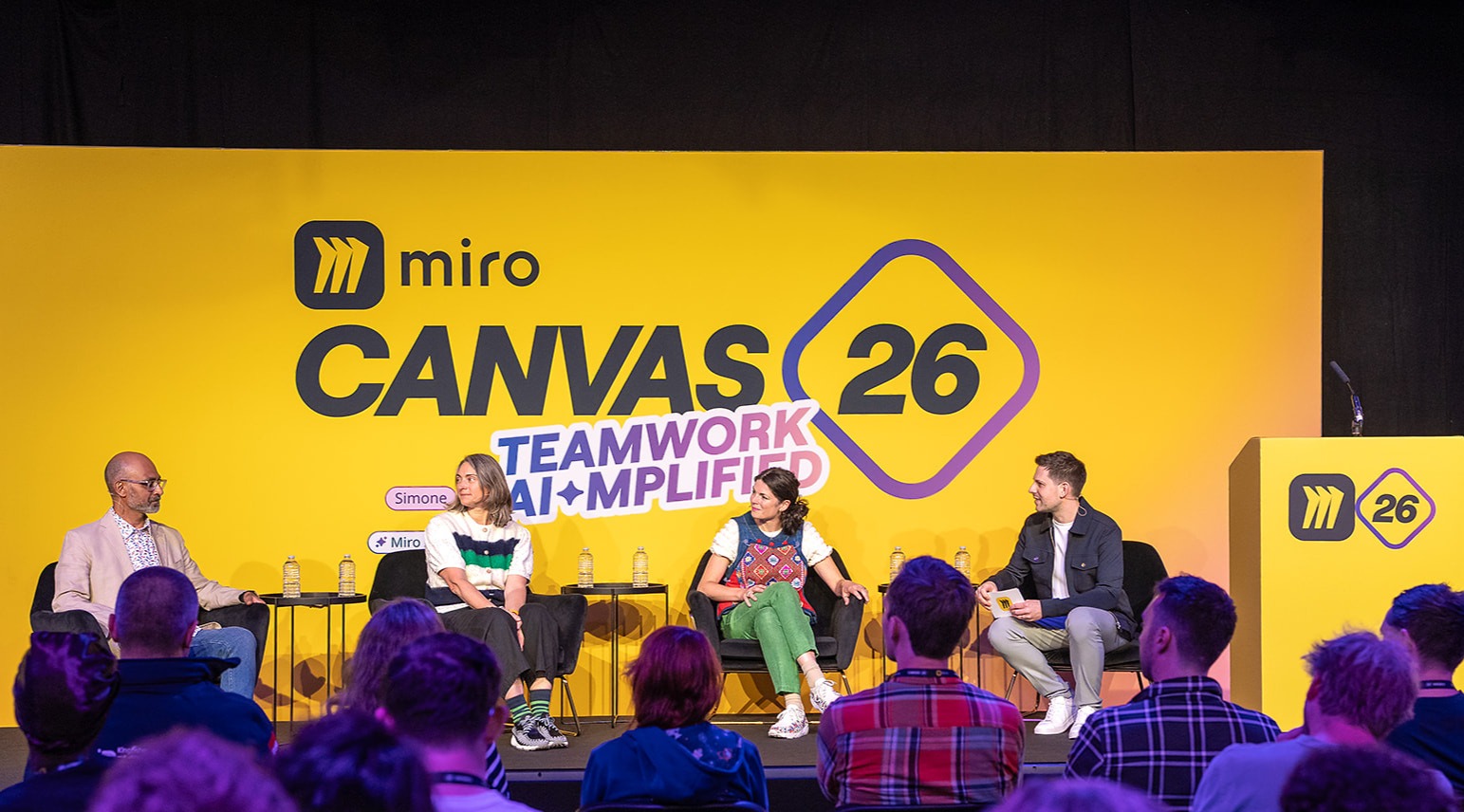
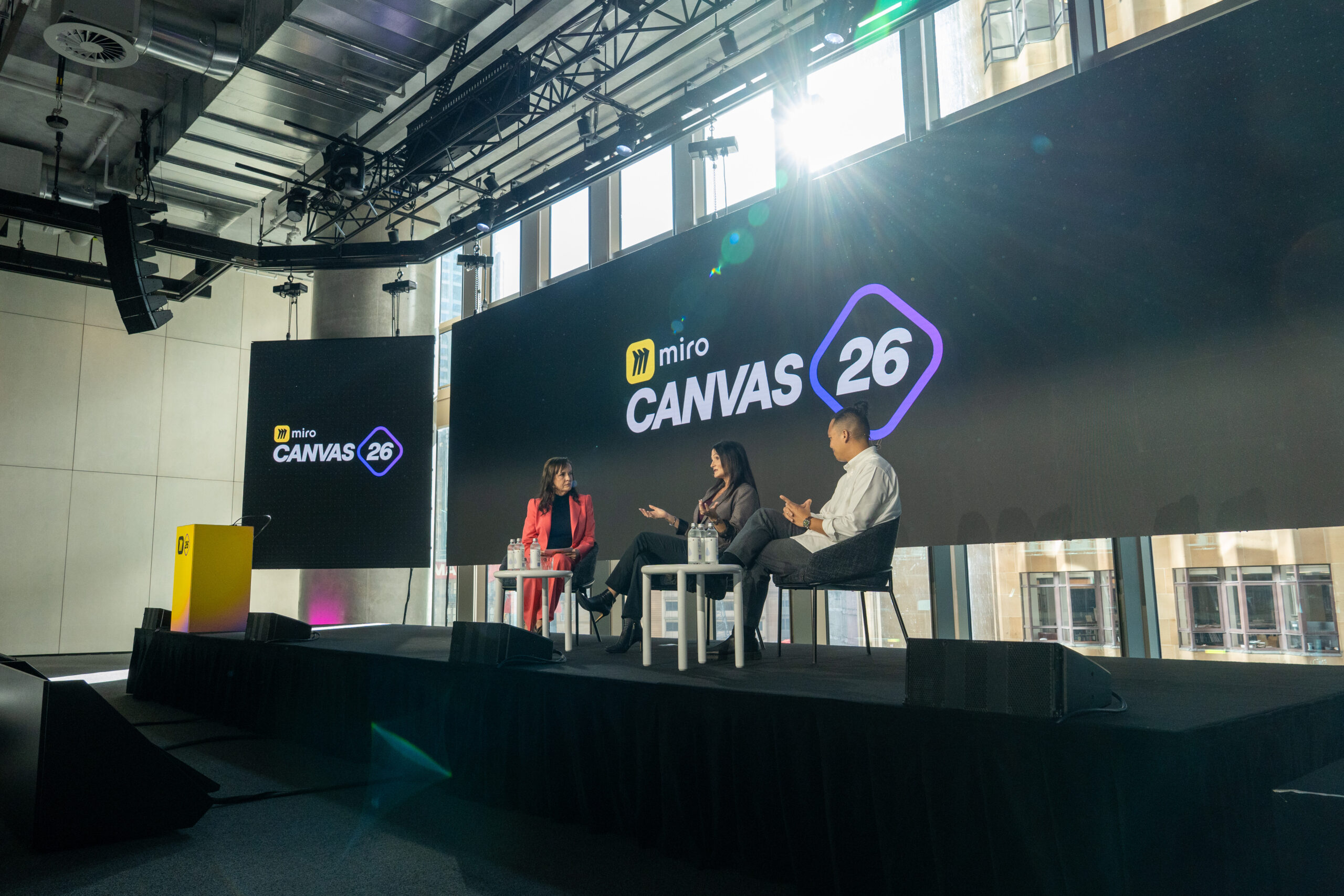
At Canvas 26 Sydney, Wendie Lee, Global Chief Product and Technology Officer for FCTG’s Leisure Luxury and Independents divisions, was joined by Hans Barroga, Head of Design for the same divisions, to share how they’re striving to build at speed but in the same direction.
“AI is infused with every strategy now,” Wendie said. “How do we use AI to be more efficient? But also, how do we use AI to protect the moat, which is our expertise, our deep travel knowledge, and that human connection that people still crave in travel?”
Wendie Lee, Global CPTO, Luxury & Independents at Flight Centre Travel Group
Challenge
With lean teams running across multiple brands and markets — part of a 12,000-person global organisation spanning 90 countries and 30 brands — and shared engineering resources spread across the organization, the answers to these questions weren’t immediately obvious to Wendie, Hans, and their Leisure Luxury & Independents team.
When AI arrived, it arrived unevenly. Individual team members started adopting tools at their own pace, in their own ways. “We saw a lot of AI activity,” Hans recalled. “But it was uneven, at different levels of maturity, and we weren’t rowing in the same direction.” People were moving faster, but not necessarily together.
The underlying friction was structural. Work was sequential — research, then validation, then ideation, then build — and context would dissolve between steps. “We’d have this incredible energy around agreement in the room, but then when we’d leave we had to translate [the conversation] and then put it back in the room in a different setting, potentially with different people,” Wendie explained.
That context overhead was the ceiling. AI, applied carelessly, would only raise the speed at which everyone hit it.
Solution
Wendie set out to reimagine how work gets done across the FCTG’s Leisure Luxury & Independents divisions, working strategically with Miro, Anthropic, Google and Amazon to adopt an interconnected approach to how product squads collaborate, make decisions, and move together.
Their biggest shift has been from sequential to parallel workflows. Where teams used to wait for a research phase to finish before the next step could start, they now run validation and synthesis alongside the work rather than after it. Hans described the change: “We could be unpacking our assumptions and questions in the workshop, while in the background running those validation points with industry reports, customer insights, and interviews — and even understanding what’s out there that we’re not asking ourselves.”
The result, he shared, is a fundamentally different quality of conclusion: “At the end of that session, not only do we come in with a view of where we should go, but it’s much deeper, much more verified. The bigger unlock is that we’re not just moving fast — we’re able to problematize and understand what’s the most high-value problem to solve.”
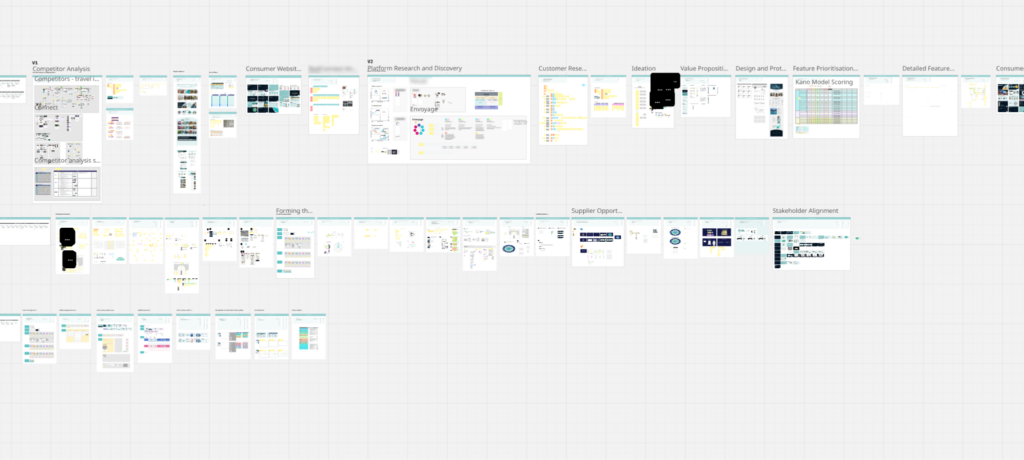
Miro is where the team’s thinking, external research, and stakeholder input all land together, giving AI enough context to synthesize in the room rather than after it. As Hans explains:
“When you have siloed human-to-agent working and nothing’s being shared, the richness disappears. Miro enables that collaboration — sharing the insights, unpacking the tensions. That’s where the richness of the conversation sets off a good foundation for knowing what solutions fit with the problems you’re actually solving.”
Hans Barroga, Head of Design, Luxury & Independents at Flight Centre Travel Group
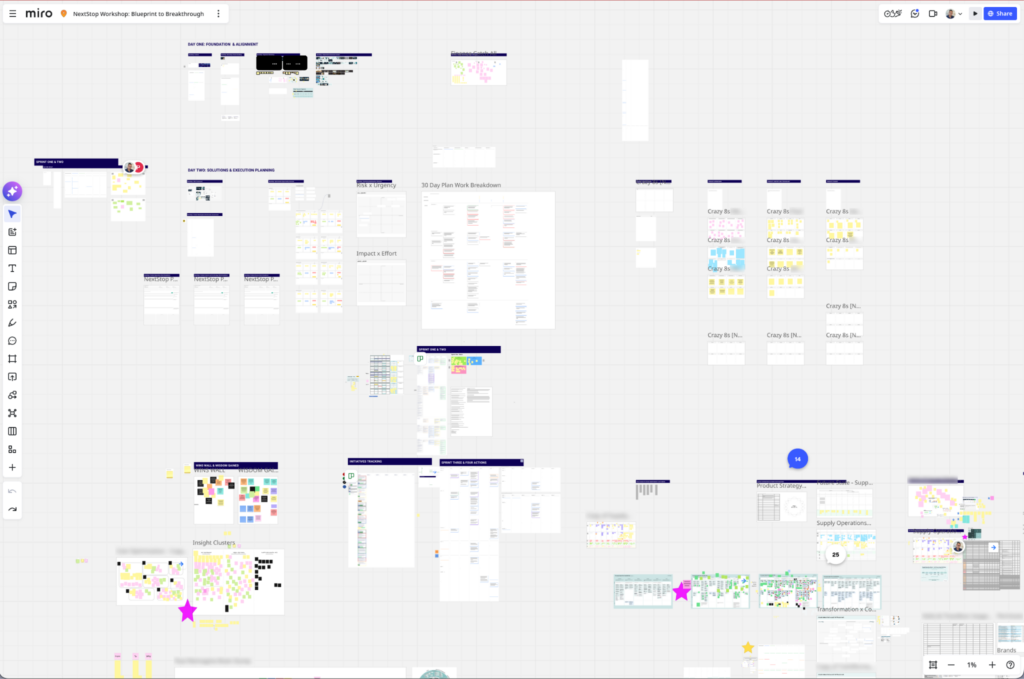
One concrete example: Late last year, Wendie and Hans led a 12-week, cross-organizational initiative spanning every discipline from finance to procurement. Their “From Blueprint to Breakthrough” Miro board captured months of organizational thinking, but at the time the organization was still primarily PowerPoint-based. Insights built in Miro had to be translated into slides and re-presented to different stakeholders at every stage. “We can now approach that completely differently,” Wendie says. The Luxury and Independents team can focus their skills on doing valuable work, not translating that work into slides.
Impact
The clearest signal of success is cultural, not operational. “Our design sprints are getting shorter,” Wendie says. “Our stakeholders are happier, and ultimately we’re able to measure that the work we’re doing is delivering value faster.”
Individual team members within Wendie and Hans’ divisions are doing things that used to require multiple specialists. One product manager built a tool using AI that accelerated content entry into the new digital product showroom with no engineering support required. Engineers are getting closer to deep problem-solving rather than being pulled into coordination work.
The tools are expanding what teams can imagine, not just how fast they execute. As Hans put it:
“We’re in the golden age of creation. [AI’s] enabling us to express our creative ideas in different mediums and different forms — to do creative work that’s much bigger than what we had imagined.”
Hans Barroga, Head of Design, Luxury & Independents at Flight Centre Travel Group
Strategic ideas are becoming podcasts for leaders to absorb, quick sketches turned into movie posters that help engineering teams visualize a concept.
And according to Wendie, this is just the start of the transformation. “We’re right in the thick of it. It’s always more demand than capacity, and our teams will all transform at their own pace.” The signs, though, are accumulating. “I’m seeing more stakeholders getting to a shared view faster, which is really exciting. If more stakeholders are on the journey with you, that actually accelerates time to value.”
The bigger picture
For other leaders thinking about a similar shift toward AI speed at scale, Wendie’s advice is practical:
“Start with what you can control. It might be your own workflow first, then the people around you, before you scale to what it means for your customer. Just start somewhere, because you can get overwhelmed with how many things you’ve got to solve.”
Wendie Lee, Global CPTO, Luxury & Independents at Flight Centre Travel Group
Hans points to the moment the change actually stuck for their team. They ran a workshop to surface the problems they were collectively facing — not in isolation by discipline, but across the whole group. Once they understood what those problems were, the path forward became obvious. A shared Slack channel for AI learnings. Loom walkthroughs. A standing weekly prompt: what did you try this week? “The shift really kicked in when it was very clear what problems we were solving for the way we work,” he says. “Once we understood what those problems were, the ideas just flowed.”
Both closed on the same point: Keep the customer at the center. “Don’t do it [adopt AI] just because you think you should,” Wendie says. “Always ask yourself: what’s in it for the customer, and what value can we create? Use that as a guide to solve the right problem.”
What Flight Centre is building toward is concrete: products that better serve travelers, tools that help advisors do their best work, and a team that can move from problem identified to solution shipped faster than the old model allowed. Whether they get there through a sprint, a quarter, or an intentional day carved out for the team to focus on how they work, Wendie’s points hold. Just start somewhere.