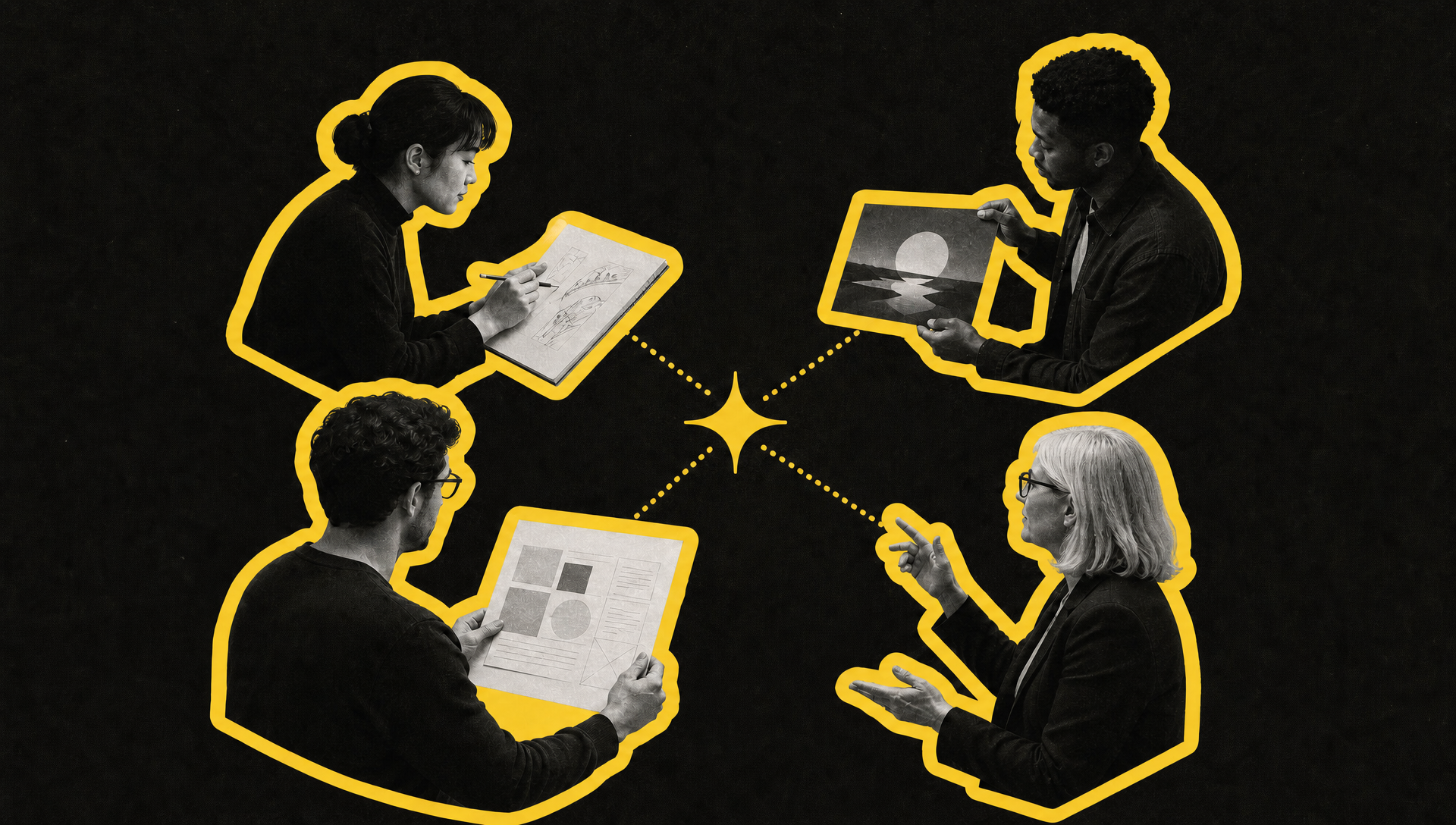
In product development, the “concept and ideation” phase is often where the magic happens — or where it’s lost. A common scenario: a dozen browser tabs open, notifications pinging, and a blank document staring back at you. While modern product lifecycle management (PLM) gives us the framework, the “messy” beginning of a product’s life requires something more intuitive than a keyboard.
To bridge this gap, many product teams are turning to the reMarkable paper tablet. reMarkable combines the natural feel of handwriting with the power of a digital tool, allowing you to sketch ideas and map out processes exactly as they come to you. By integrating the cognitive benefits of the reMarkable paper tablet with Miro’s capacity for collaboration and implementation, product teams can connect individual inspiration with shared execution
The cognitive science of the “open canvas”
The surface through which you brainstorm fundamentally changes how your brain processes information.
Triggering the creative sweet spot
Handwriting triggers alpha and theta brain wave synchronization, which are critical neural signatures of creative thinking. When you type, however, your brain shows almost zero synchronization in these specific frequency bands. So, it’s a misconception that typing is simply a faster way to capture ideas.
For product teams looking to solve complex user problems, this means the difference between a “standard” solution and a breakthrough.
Producing 25% more diversity in ideas
Data shows that handwritten brainstorming on reMarkable produces 25% more diversity in ideas than digital-only sessions. This is because the “open canvas” of paper engages the brain’s spatial centers, allowing you to link the disparate dots more effectively than a linear text editor.
Increase cognitive calm in the “concept and ideation phase”
Miro identifies the first stage of the product development lifecycle as a time when “research is scattered across tools and teams struggle to link the dots.” Adding more distractions at this stage can be counterproductive.
- The willpower shield: Analog tools like reMarkable act as a “natural closed loop.” Without notifications competing for your attention, your fluid intelligence and working memory remain at their highest levels.
- Reduced stress: Switching from a laptop to reMarkable paper tablet can lower work-related anxiety and annoyance by over 35%. This “cognitive calm” is essential for the deep work required during early-stage ideation.
- The natural filter: The pen acts as a filter, naturally prioritizing high-value ideas over the “record everything” mentality of typing, which leads to superior recall results later in the PLM process.
Transitioning seamlessly into team collaboration
While the individual spark often happens on the “paper” surface, products are built by teams. This is where the partnership between reMarkable and Miro shifts the workflow from an individual exercise into a collaborative team effort.
From sketch to sync
Once those 25% more diverse ideas are captured on your paper tablet, they don’t stay trapped in a physical notebook. With the reMarkable-to-Miro integration, you can move from the individual “open canvas” directly into Miro’s shared workspace with one single tap. This allows teams to:
- Organize and evaluate: Use Miro’s AI-driven features to cluster handwritten notes and refine concepts with smart suggestions.
- Map dependencies: Take your handwritten logic and immediately start defining relationships between features with Miro’s dependency mapping.
- Maintain a source of truth: Like Xero’s use of a Customer Journey Framework in Miro, your early ideation becomes a living document that teams can reference as the product moves into design and development.
Takeaways for product leaders
- Embrace the “messy” middle: Don’t rush into structured documentation. Use the cognitive benefits of handwriting to create more original ideas.
- Protect your team’s focus: Encourage analog tools during the ideation phase to reduce “notification fatigue” and boost working memory.
- Bridge the gap from free-form thinking to execution: Use reMarkable for the spark and Miro for the flame. The transition from pen to canvas ensures that no brilliant, non-obvious idea falls through the cracks. And teams that invest in getting discovery right move faster and with more confidence when it’s time to build.