As AI compresses time from idea to release, any team can build quickly — but are your teams just moving faster in the wrong direction? Every week you spend building something customers don’t want is a week your competitors could be capturing market share.
The pressure isn’t just to move fast — it’s to be right.
The winners in this new era will be those who use AI and shared context to discover and validate what matters most to customers — and then accelerate the work that brings those ideas to market.
Why discovery and validation feel harder than ever
The delivery phase of product development is a different animal today than just a couple of years ago. What once took months of engineering effort can now be built in weeks with help from AI code-gen tools.
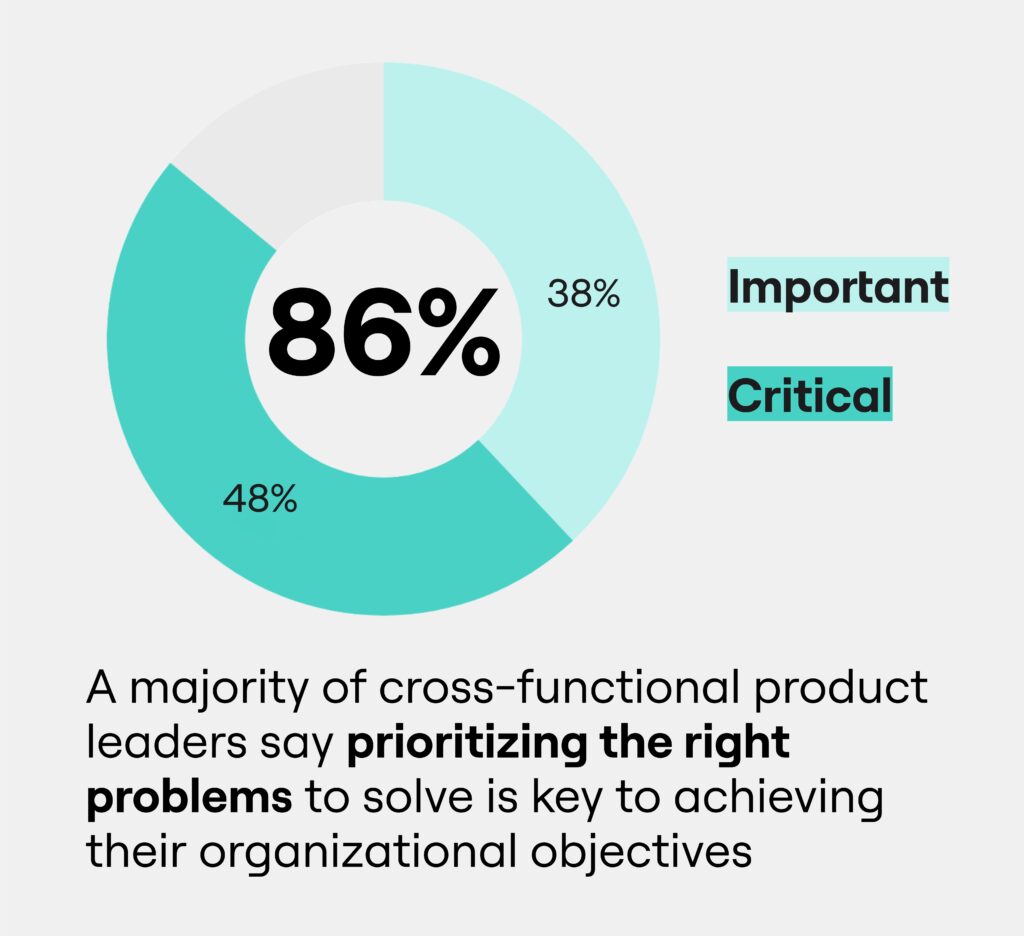
Yet the discovery and definition phases haven’t kept pace. While 86% of engineering, product, and design (EPD) leaders say prioritizing the right problems is critical to achieving business goals,¹ only 19% of EPD leaders give their companies top marks when it comes to turning customer insights into actionable product recommendations.²
Common challenges surface everywhere:
-
Fragmented data: Research sits in one tool, feedback in another, plans in yet another. Feedback scattered across Salesforce, Zendesk, Gong, Slack, support tickets, sales calls, and user interviews creates massive blind spots.
-
Exploration bottlenecks: Design resources are stretched thin, and non-designers struggle to create useful visuals themselves. Traditional prototyping can take weeks, but development now takes days. Some teams are skipping validation entirely — building features directly into production and hoping for the best.
- Cross-functional misalignment: Product, design, and engineering teams are moving faster than ever — but operating on their own assumptions, creating misalignment, friction, and rework.
Each of these obstacles slows innovation — not for lack of ideas, but rather for lack of shared clarity. And when insight is scattered across tools and teams, the customer’s voice fades into the background. Teams are making high-stakes calls without a complete view of what customers actually need.
How the strongest product teams decide what to build
Across high-performing, cross-functional product organizations, three capabilities are emerging as essential — each one strengthening discovery, sharpening decisions, and raising confidence in what teams choose to build.
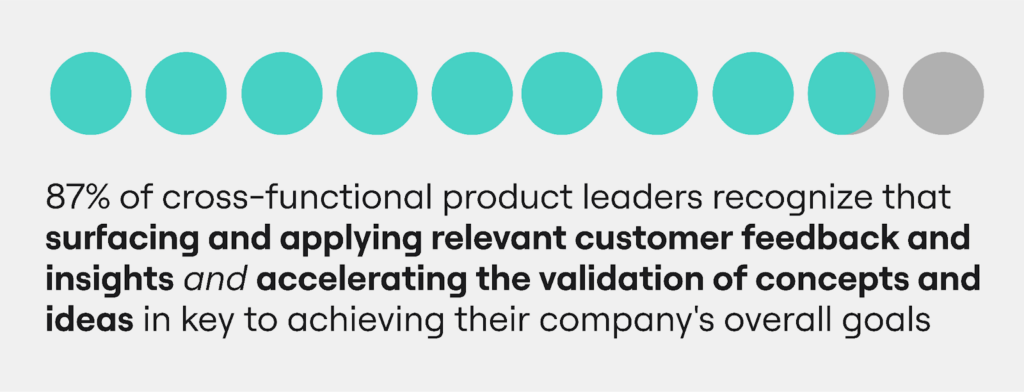
1. Unified customer intelligence
The benefit: Reduced discovery costs, increased customer satisfaction
Great product decisions start with clarity about the most urgent customer pains to solve for — data that’s connected, traceable, and easy for teams to act on together.
Bringing research, feedback, support signals, and market inputs into one shared space lets teams spot patterns early and understand the “why” behind emerging opportunities. This reduces guesswork, shortens discovery cycles, and ensures prioritization is rooted in what customers actually value.
How Miro helps
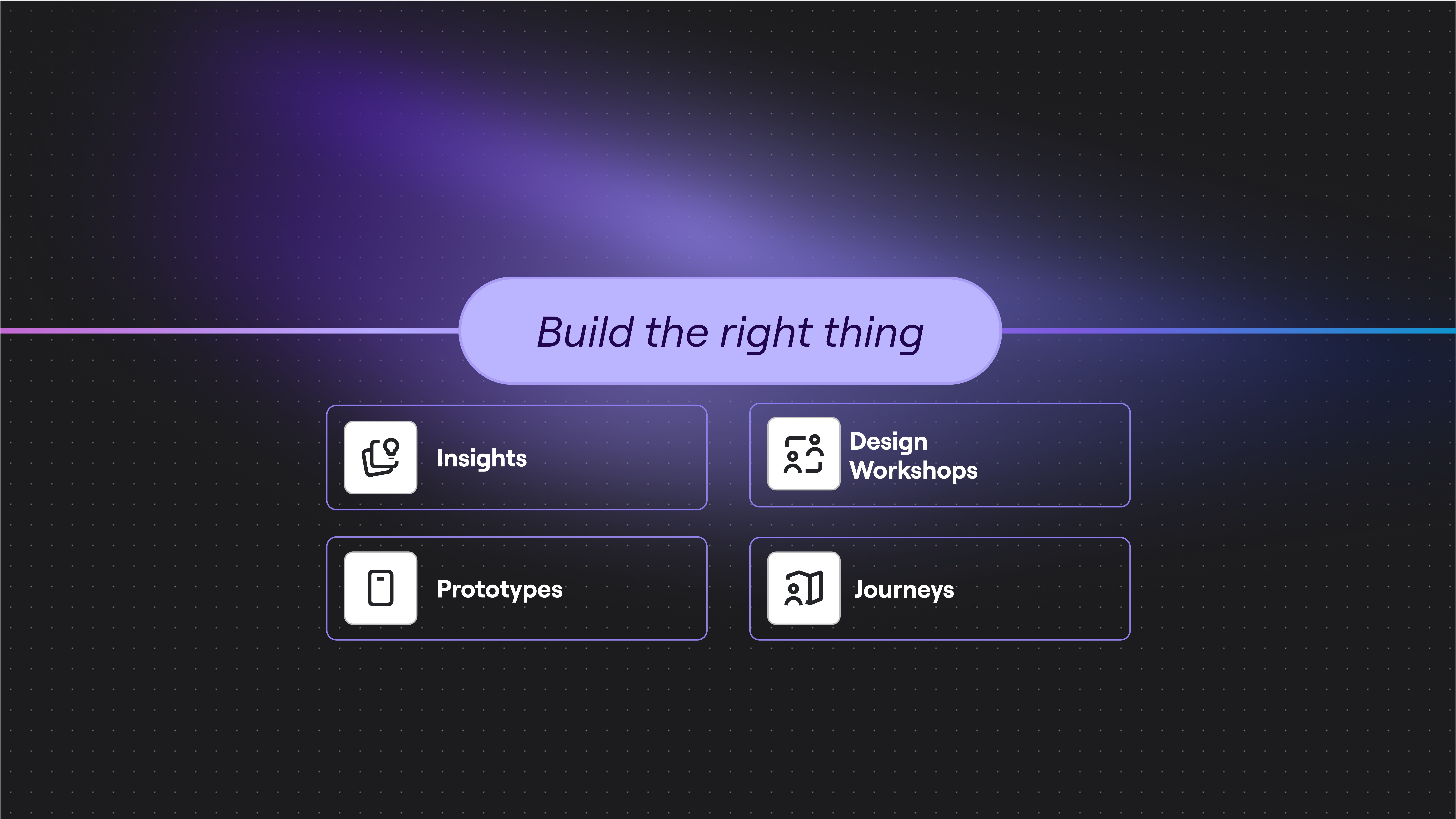
Miro Insights consolidates feedback from CRMs, surveys, interviews, support systems, and more — then uses AI to surface themes, identify opportunity areas, and recommend what to build next. Every insight links back to its source, keeping decisions grounded and defensible.
2. Rapid visual concepting and testing
The benefit: Faster validation, higher execution confidence
Once opportunities are identified, teams need a fast, low-cost way to visualize possibilities before committing development resources. Time spent on pixel-perfect designs slows down early validation, but skipping visualization altogether leads to rework and missed expectations.
High-performing teams explore more directions early — making ideas tangible in minutes, comparing alternatives, and testing assumptions while the cost of experimentation is near zero.
How Miro helps
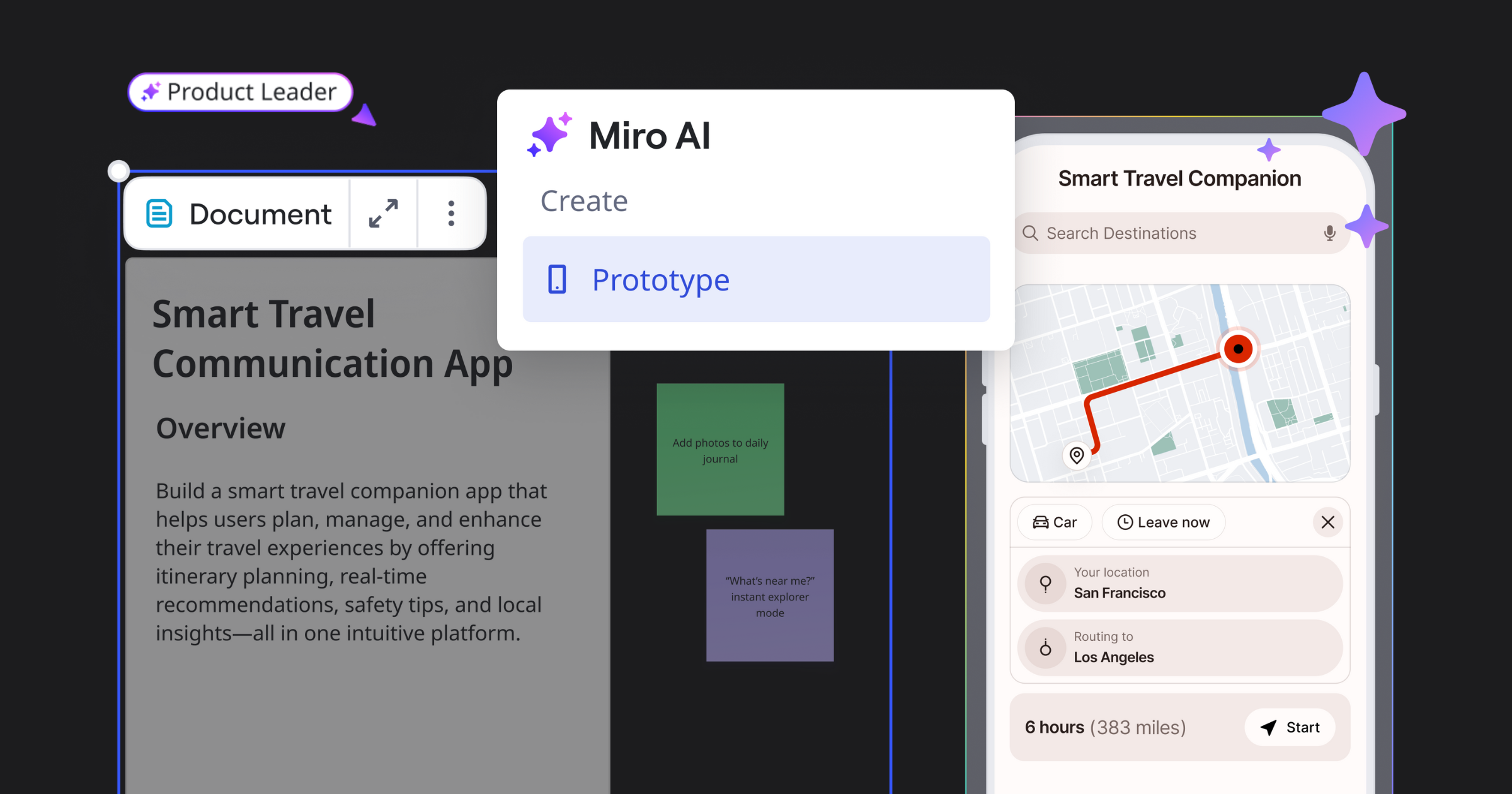
Miro Prototypes lets anyone turn sketches, sticky notes, screenshots, or written prompts into interactive prototypes in minutes. AI can generate variations, apply branding, and create click-through flows so teams can compare options, test with customers, and converge on solutions with higher confidence.
3. Continuous customer-centric alignment
The benefit: Faster time to value, increased customer satisfaction
Alignment can easily drift as teams move from strategy to design to build. The strongest organizations maintain customer context throughout the entire lifecycle so decisions stay connected to actual customer needs, not internal assumptions.
This requires systems that keep customer insights alive, visible, and tied to daily work, plus collaboration rituals that help the whole organization move forward with clarity.
How Miro helps
Miro Journeys turns static journey maps into living knowledge systems that are automatically updated as new feedback arrives and linked to relevant work in Jira, Azure DevOps, and other systems your teams use.
Miro Design Workshops provide structured environments for cross-functional teams to co-create, critique, and align quickly — with AI-powered summaries, voting, and decision capture to document what was decided and why.
The Forrester Wave™: Customer Journey Management Platforms, Q4 2025 report recognizes Miro as a Strong Performer among customer journey management (CJM) platforms, noting that Miro excels in journey map creation, collaboration, co-creation, ideation, and usability — strengths that we believe streamline the path from raw data to actionable design. The report also finds that Miro is best suited for large enterprises with complex cross-functional needs in industries where teams value fast time to value and want AI-accelerated research, mapping, and prototyping.³
When teams combine unified insight, early exploration, and shared context, everything comes together as decisions grounded in evidence, not opinion, and the confidence that you’re building products and features your customers will use and love.
The opportunity ahead
We believe the future of product development is teams and AI working together in a shared space where strategic thinking becomes visible and actionable, context flows naturally across the product lifecycle, and plans evolve continuously.
When teams work this way, they don’t just ship faster — they ship what customers will care about. And in an AI-accelerated market where competitors can build at hyperspeed, that’s the difference between keeping pace and pulling ahead.
Miro for Product Acceleration brings all of this together in an end-to-end solution that helps engineering, product, and design teams connect strategy to execution, build the right things, and get the most from their AI investments, all while flowing from early concepts to final delivery at speed.
¹ Forrester’s AI Workflows For Team Innovation Survey, Q3 2025.
Base: 170 EPD leaders in organizations across USA, EMEA, and APAC currently integrating or planning to integrate AI into workflows.
² Miro survey, Q1 2024. Base: 1,802 decision makers, including 1,010 EPD leaders in organizations across USA, EMEA, and APAC.
³ Forrester does not endorse any company, product, brand, or service included in its research publications and does not advise any person to select the products or services of any company or brand based on the ratings included in such publications. Information is based on the best available resources. Opinions reflect judgment at the time and are subject to change. For more information, read about Forrester’s objectivity here .