Tomer Cohen spent 14 years at LinkedIn, six of them as Chief Product Officer. At Canvas 26, he discussed the rise of the full-stack builder — what it means for roles, org charts, and coordination — and named the collaboration challenge nobody has cracked yet.
In fall 2022, Tomer Cohen sat in a conference room in Redmond and watched a demo of GPT-4 — several months before the rest of the market would see it. “Literally the next day I grabbed my team and said, ‘I’ve seen the future. We’re going to have to rebuild our roadmaps.'”
Tomer’s teams spent the following months deconstructing the roles of professionals LinkedIn serves — recruiters, marketers, sellers — into their atomic tasks, then asking which parts would be “machine,” which parts would be people, and how the two would flow together. Then he realized, “We’re basically imagining this future for our customers, but internally we’re still slotted into PM, design, engineer, data, not really rethinking the way we work. The lines do not make sense anymore.” Meanwhile, he said, “a lot of our top talent was starting to blur the lines intuitively. They have a tool, so they can just work and do things.” Those experiences and observations convinced him the industry was heading toward the “full-stack builder,” someone who works fluidly across functional lines, getting from idea to launch quickly with their agents and team.
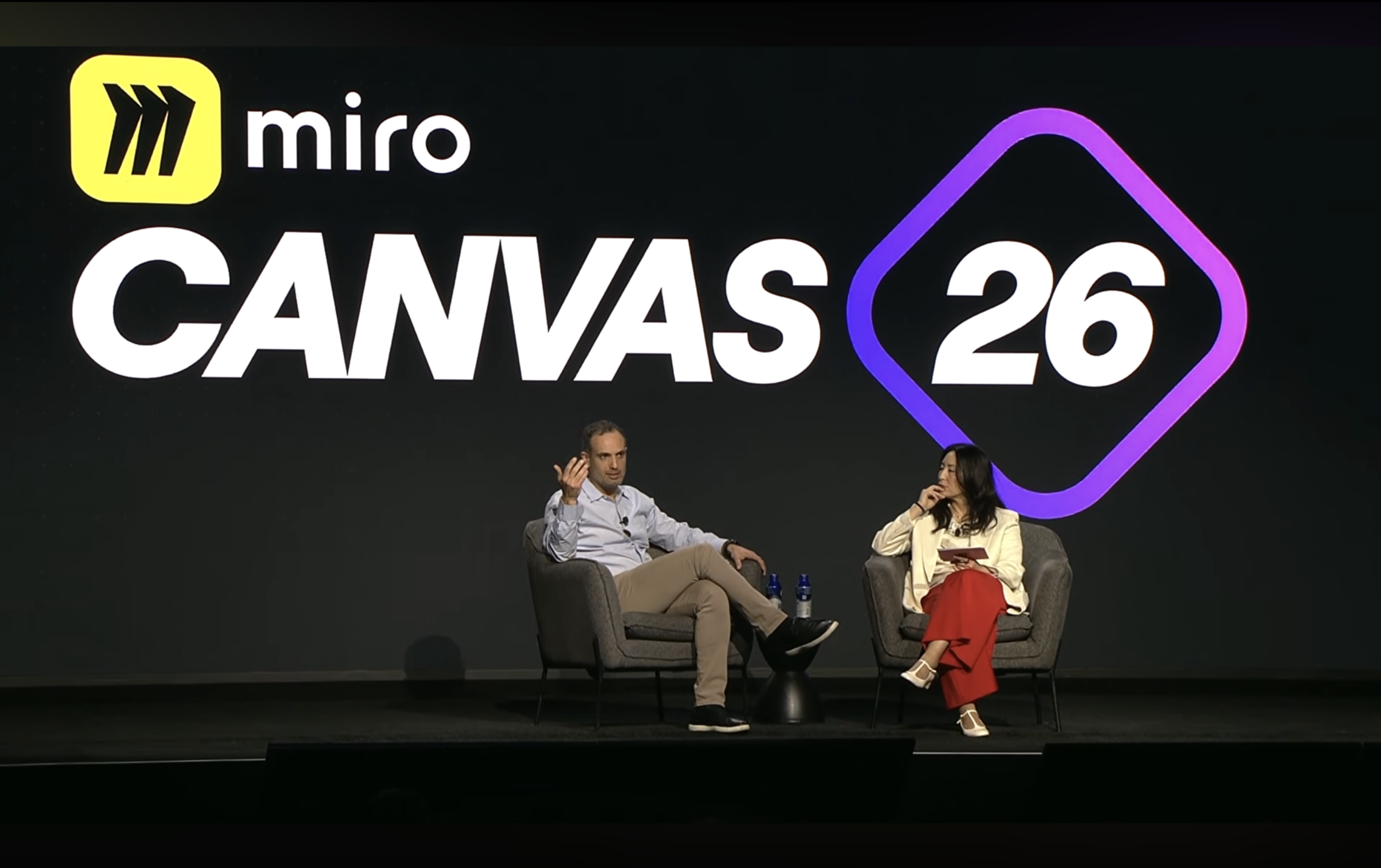
I had the opportunity to unpack that story with Tomer on stage at Canvas 26 San Francisco. Our conversation kept coming back to how AI is reinventing product orgs — changing jobs, redefining who and what counts as a teammate, and reprioritizing the role of judgment.
Why shipping something simple takes so long
The builder’s role, Tomer said, is simple on the surface: research it, spec it, design it, code it, take it to market, and then iterate. But in companies working at scale, every step in that flow sprouts substeps.
At LinkedIn, vetting a single idea meant working through “15 to 20 sources of information” — data pools, customer conversations, tickets, social media. Specs meant design review, privacy review, security review. “Literally, it goes on and on and on,” he said.
“Our organizational chart starts to mimic our process complexity, and we start to hire people for those substeps. We took a process which was very simple inherently, and we added a lot of stuff into it so we can cover all the ground.”
“We can bring those disciplines together,” as Tomer put it, cross-working from idea to launch instead of handing off between specialties.
“Whether or not you’re changing your job, your job is changing”
Much of the coordination that used to be necessary has disappeared. Think about a routine bug fix that traditionally has hopped from PM to designer, into a spec, back to PM, on to an engineer, then into testing — several people coordinating what is, fundamentally, a small change. Now, he said, “you can see a designer saying, ‘Hey, I can pick this up. I can code it. I can push it.'”
That doesn’t mean collaboration is gone; quite the opposite, in fact. Deciding direction together is becoming more of the job, and the pace of change is fast.
“I think in many ways we can tackle bigger priorities. We’ll see a lot more collaboration, alignment at a more strategic level.”
LinkedIn used to publish a list of the most in-demand roles in the market; in one year, Tomer said, 70% of the roles on it changed. He predicts that the skills required to do a job will continue to change by 70% over the next few years.
So, amid these shifts, what still holds its value?
- A growth mindset.
- AI fluency paired with agency — and he emphasized the agency side. Talking fluently about AI is common; what’s rare is having “literally automated a part of your day with an agent that you built.”
- For builders: vision, empathy, communication, and creativity are critical.
- “Ultimately, the biggest part is judgment. When you have complex, kind of ambiguous situations when it’s not a clear decision, are you able to make that call?”
From individual productivity to organizational capability
“It’s not just about the individual here. This is where I’m putting my organizational lens on,” Timer explained. “When you have a group of full-stack builders, you’re able to actually go to market and tackle priorities really quickly because you can assemble the teams together. Now I’m elevating the organizational capability, not just the individual capability,” he said.
But the gold ring of team-level collaboration between people and agents? He hasn’t seen many teams grab it yet: “Coordination is not easy. All the building blocks are there, but it takes work to build.”
Where it’s heading, though, is clear to him. Companies will hire agents into roles — “you might hire an agent to be a program manager … and in some cases the agent will be a representation of the employee, but they’ll all be working together. It’ll be teams of agents, teams of employees, and then you start thinking about, what’s the shape of that new organization? What does that look like?”
And taking it a layer deeper, “How do I make sure that my agent works with the finance team’s agent?” Asked where the untapped opportunity is, he landed here: “Coordination across the whole organization is going to be a big domain for companies to focus on.”
Three collaboration modes, one shared surface
He’s talking about three distinct modes of collaboration: Person-to-person work is moving up the stack, toward strategy and direction. Person-to-agent work is spreading across every role — full-stack builders are early evidence. And agent-to-agent work is just beginning, with no playbook yet.
In most organizations, each mode also runs in its own container: decisions in meeting notes and chat threads, agent sessions in private windows, and automated pipelines humming in the background. Speed multiplies inside every silo, as does misalignment. That fracture is invisible until the moment it isn’t.
Tomer put a question to the room: With AI “you can go very fast. Everybody can say, I built this, I built that — but is it really converging towards value for customers? How many of you have seen AI translate into real revenue, real customer or member value? Most of you are still waiting for it.” But he’s confident the value is coming.
The way to get there, for Tomer, is for teams to have a strong sense of clarity of where they’re headed before they get to execution.
“If you’re able to translate your direction, your strategy into execution, and you’re able to experiment really quickly and iterate and learn, you’re going to outpace the competition.”