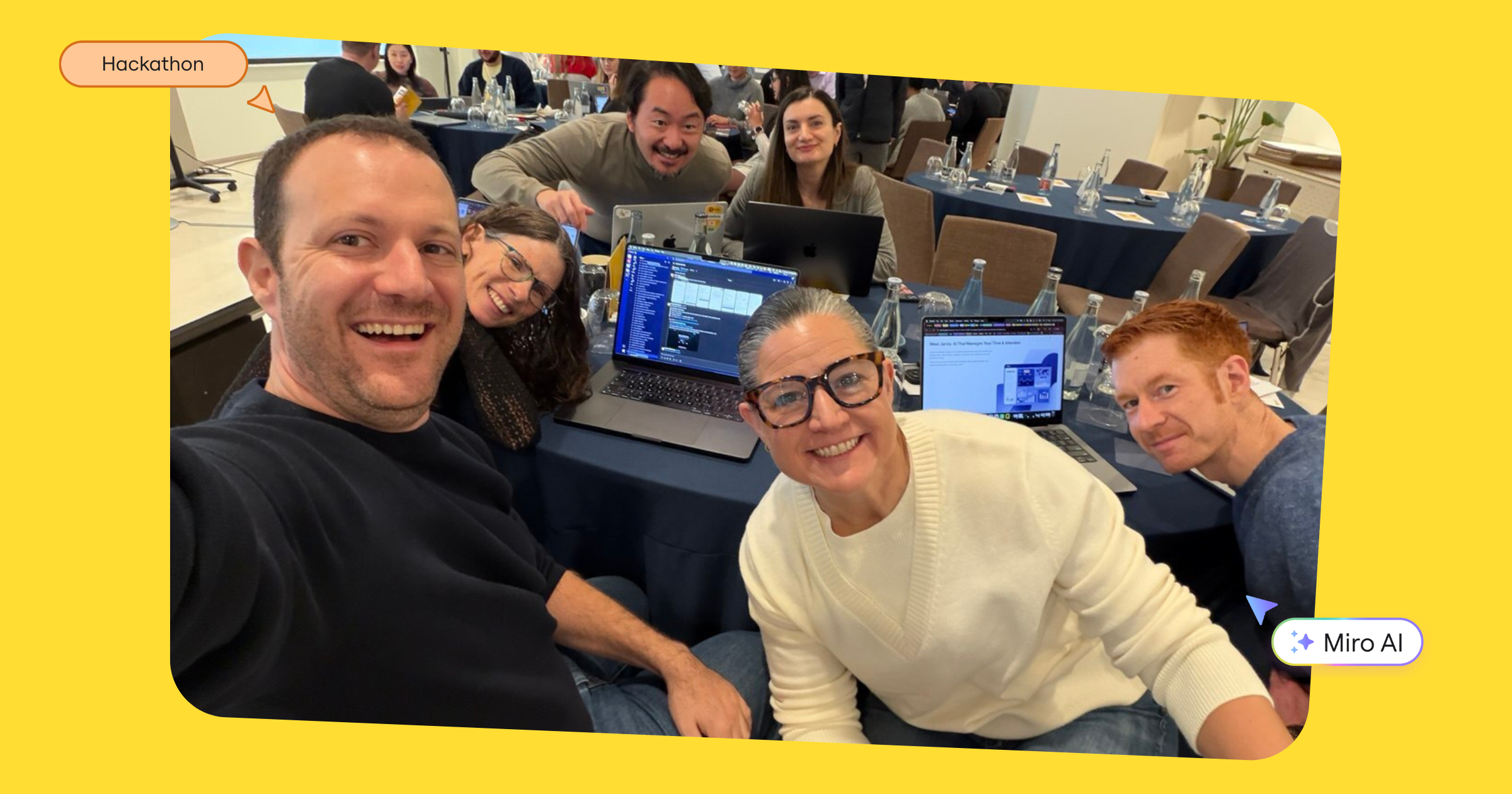
Hackathons are an essential part of the Miro ecosystem. They’re great drivers of innovation, and, even more importantly, they’ve always been a catalyst for cultural change. When teams realize how creative their colleagues are and how much they can accomplish together in a short period of time, it generates a lot of energy, courage, and a get-things-done attitude, all while building new connections.
We started running hackathons at Miro when we were just 40-50 people and have since scaled them as the company has grown to more than 1,500 people in 14 locations across the globe. Hackathons have been the source of a lot of critical capabilities over the years, from sticky notes capture at the very first hackathon in 2016 to AI Sidekicks more recently.
We’re big believers that if you create the environment for people to collaborate and experience the joy of building together, you get amazing, practical results — and, in the AI era, it’s more accessible to a range of roles, levels, and hubs than ever.
An AI hackathon for leadership
Like many technology companies, Miro has regular offsite meetings for our senior leaders to align on the strategy, plan execution, and drive cross-functional collaboration. This year, our CIO and Head of Business Transformation, Tomás Dostal Freire, who’s driving AI transformation at the company, introduced the idea of adding a hackathon to the agenda.
Offsite attendees came together on cross-functional teams to create something tangible with AI under time pressure. This was an opportunity for leaders to do some hands-on hacking after serving solely as the judges at previous company-wide hackathons, while exploring new AI-first solutions for getting great work done, fast.
Let’s take a look inside the experience.
Challenge: “Create your $1M business”
The offsite’s hackathon was in the “Shark Tank” style, meaning it followed a fast-paced pitch format where teams presented an idea or solution to a panel of judges (“sharks”) who asked tough questions; challenged assumptions; and decided whether the idea deserved approval, investment, and support.
We designed 10 intentionally diverse teams of eight people each. Everyone did double duty as both hackers and judges (though, in the latter capacity, we weren’t allowed to vote for our own ideas). In just two hours — one for hacking and one for presentations and voting — we generated 10 business ideas, 10 prototypes, and 10 pitch decks.
The challenge we faced was simple in its framing, but complex in substance: “Create your $1M business.” This entailed coming up with an idea, market understanding, business model, and plan to achieve $1M ARR, along with a working prototype.
Here were the top highlights of the experience.
Highlight #1: Engagement and creative energy were through the roof
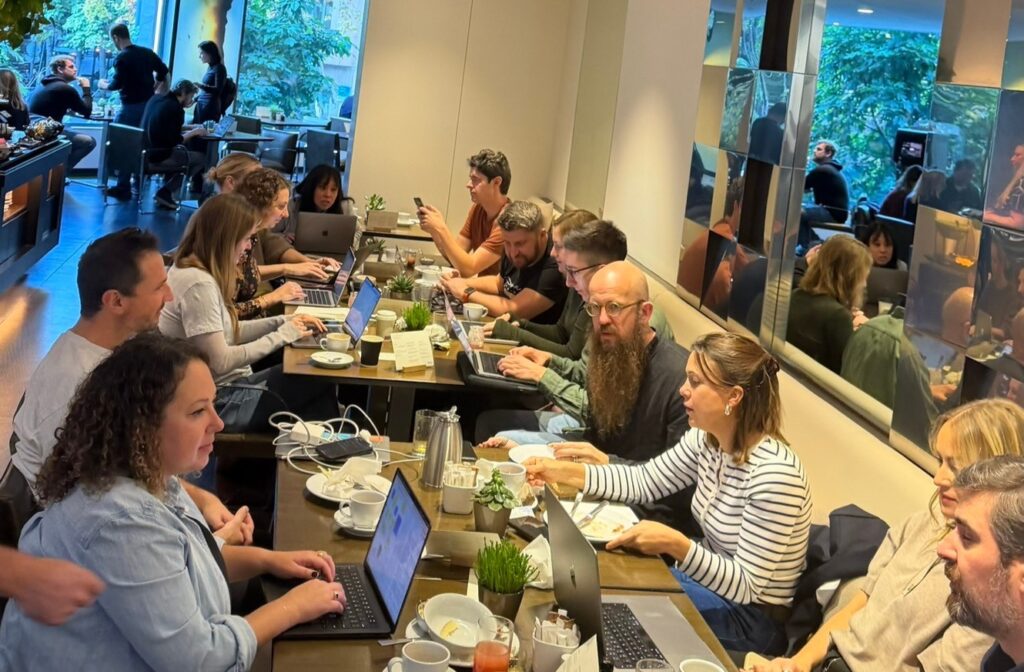
I know that I wasn’t the only one who was initially intimidated by the prospect of developing and delivering an idea worth investing in within just one hour. But that feeling of intimidation quickly turned into excitement thanks to the energy of the people in the room — or, in this case, the hotel lobby, where teams were buzzing with creativity over breakfast.
The circumstances of this hackathon — an unfamiliar environment, serious time constraints, and new-to-us collaborators — were ideal for driving a friendly competition that yielded innovative ideas, in addition to reminding us all of the joy of building.
Highlight #2: With AI You can get to your v1 really fast, even with limited coding skills
Of course, we’re biased toward Miro’s AI workflows, but they did prove extremely helpful in surfacing, researching, creating our first versions of prototypes and drafting pitch decks.
For example, one of the teams created AI executive assistant Jarvis using Miro Flows and Prototypes.
Another team working on the Cadence app (Whoop for Organizations), created a comprehensive Flow that took them from initial idea, to market research and competitive analysis, to PRD and Prototype in minutes. And, yes, the prototype even included a name and logo.
Highlight #3: We came up with really cool stuff
This hackathon was designed to give leaders time to build something with AI and each other, so that they can bring similar experiences and learnings back to their teams. By empowering our people with AI tools and creating an environment where experimentation thrives, we can help them realize their innate creativity and turn every team into a builder team.
In addition to sparking this evolution in Miro’s mindset and culture, the offsite’s “Shark Tank” resulted in some great ideas. Some of our favorites included:
- OnlyPaws (social network for pets and their owners)
- Scout (travel assistant for executives)
- Jarvis AI (AI executive assistant)
- AI hardware device with the stories for kids
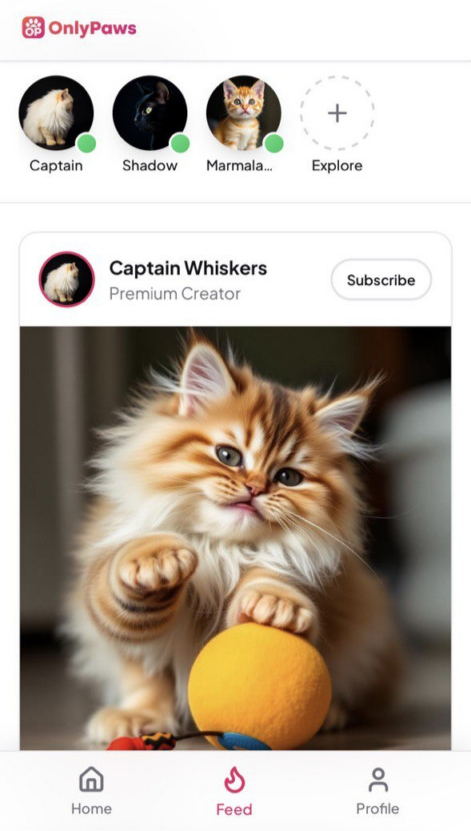
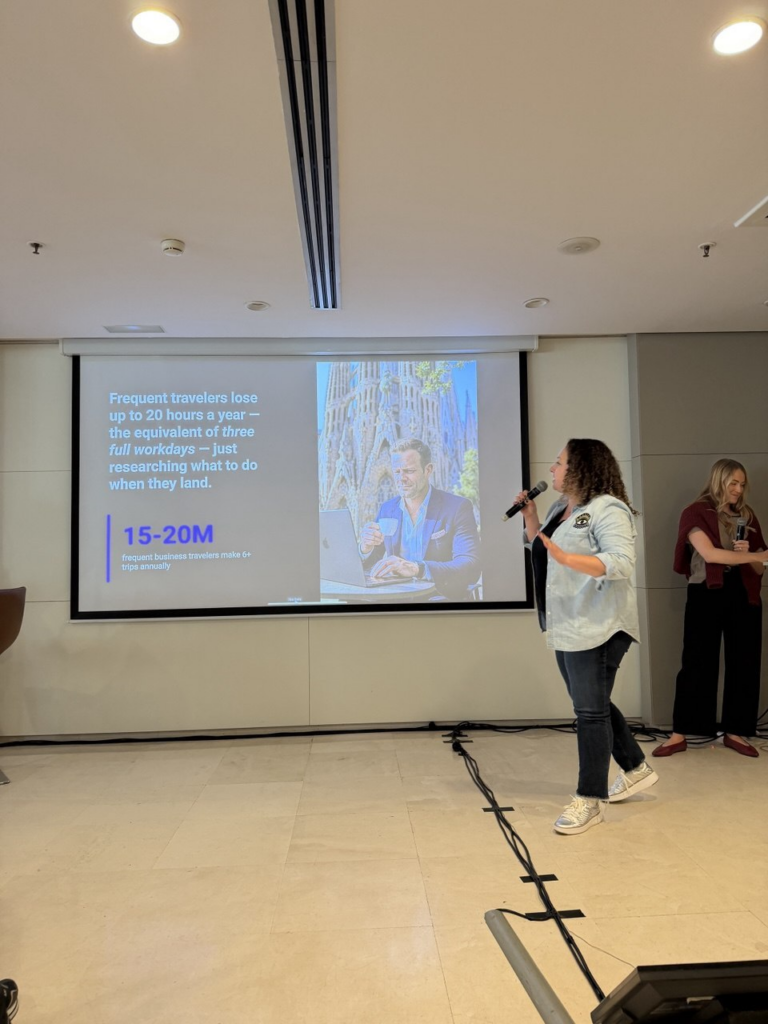
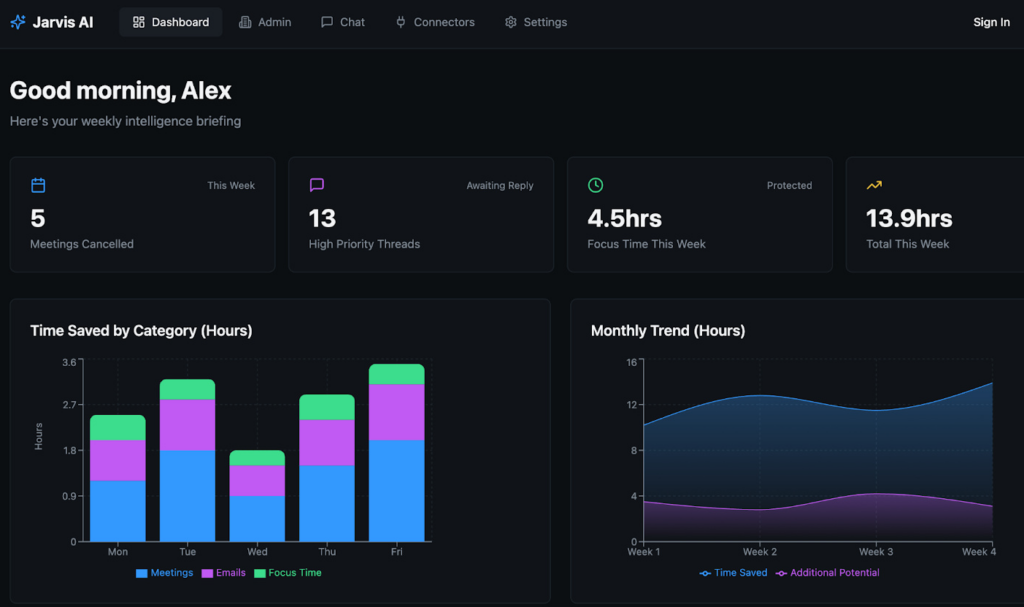
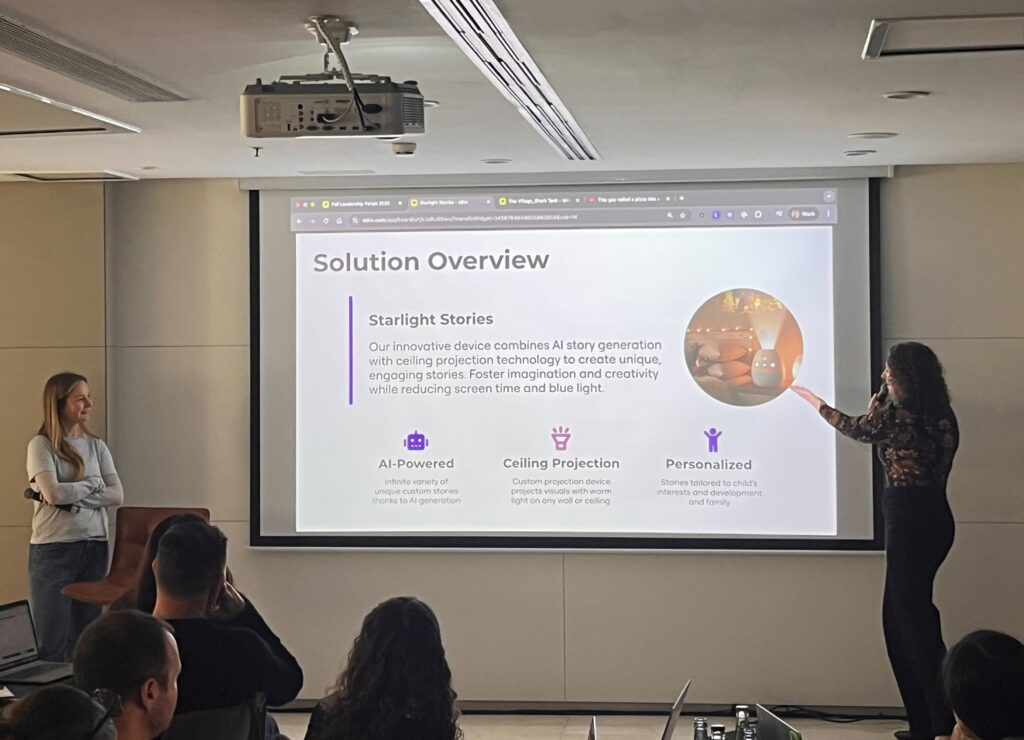
As you can see, people got really serious about investing in what their teammates created.
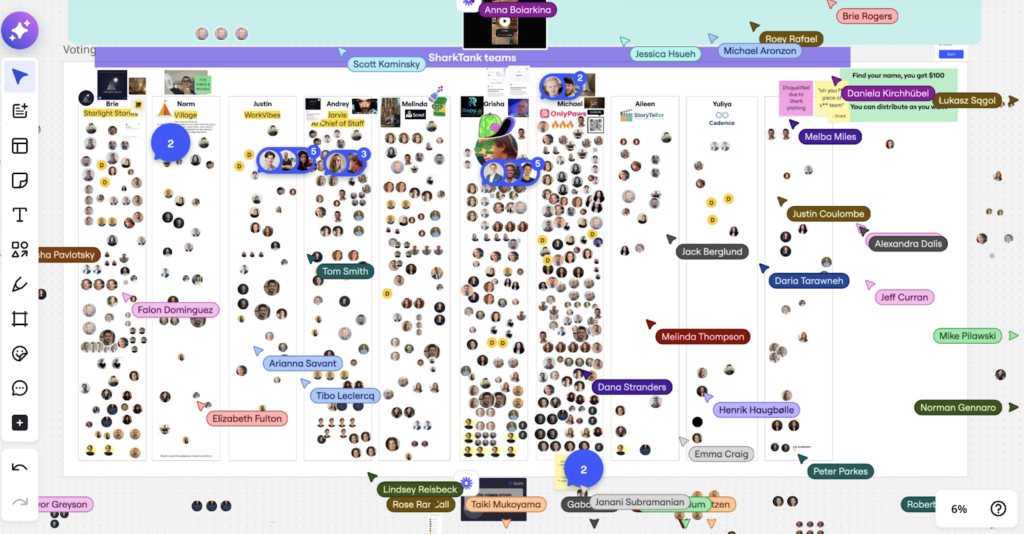
It was a lot of fun, but, perhaps most importantly, it gave us a great sense of how to create something tangible with AI — not just talk about how this technology will change the world. And this “doing” is the real recipe for long-lasting change.
How you can organize an AI hackathon for leaders
We think that our executive peers can benefit from embedding some sort of Hackathon, Shark Tank, or Design Jam experience into their offsites. Following are some key principles, and you can request a ready-to-use Space template here:
- Reserve a dedicated time. You will need a minimum 2.5 hours to a full day, if your agenda allows.
- Describe the challenge and set constraints. Be really specific about what you want the teams to achieve. For leadership teams, anything like creating a new $1M business or solving a social problem works. You can also think of something that aligns with your culture and current challenges.
- Form the teams upfront. Aim for cross-functional representation and different proficiencies with AI tools. It will help you create a great collaborative environment where people will learn from each other. Also, try to match people who don’t collaborate with each other every day to help build more connections.
- Enable teams with AI. Tools like Miro, Lovable, Replit, n8n, Google AI Studio, Claude, and Cursor can be really helpful.
- Create a shared workspace. Set up space for collaboration and voting to make sure teams have a smooth start.
Have fun! And let us know how if you need any advice or support or if you want to share your experience — we are always happy to chat.