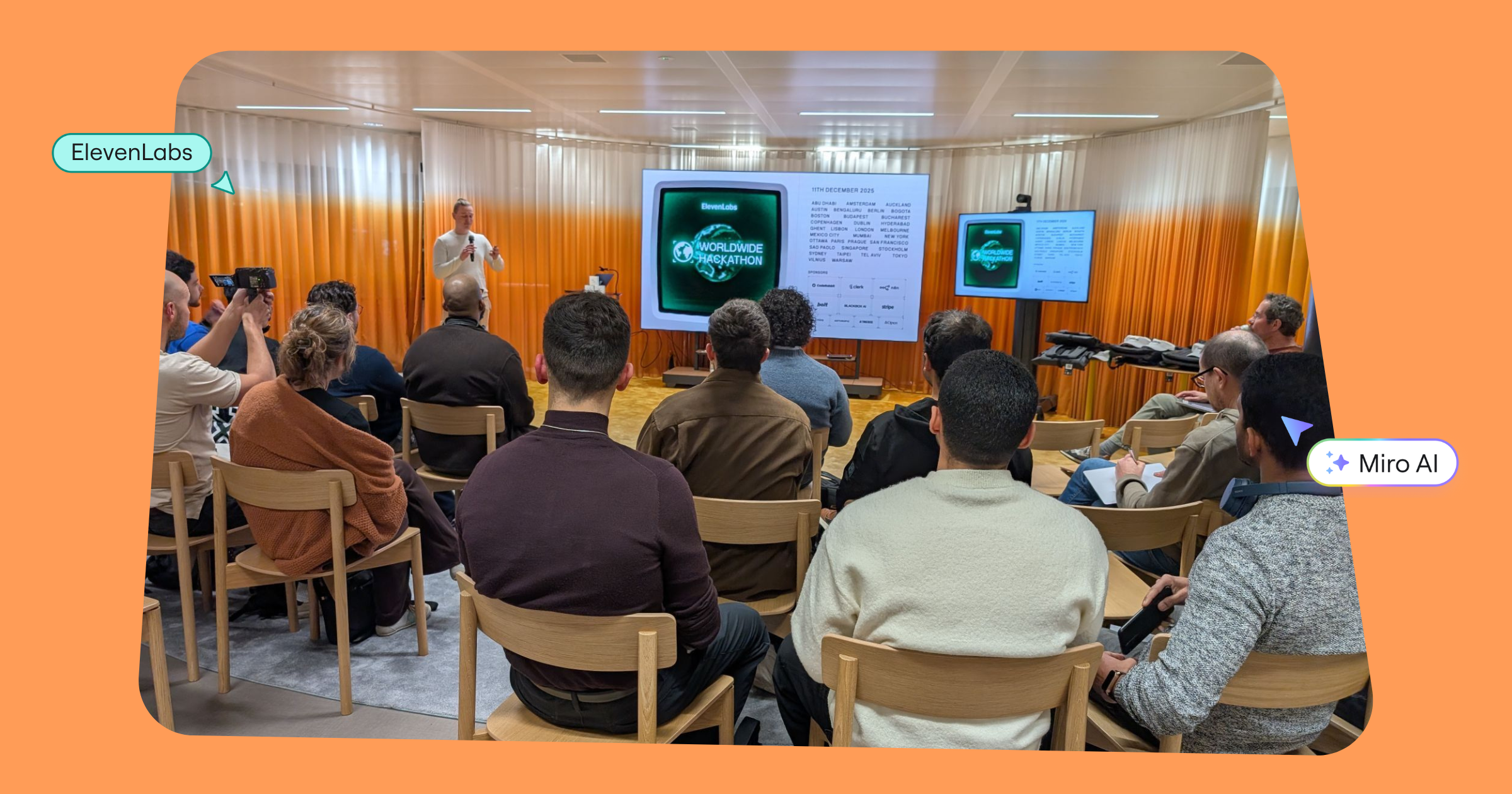
Five minutes until the ElevenLabs hackathon submission deadline, eight teams scrambled to finish their presentations and submit their videos. Some had known each other for years, while others had only met that very night. Either way, it didn’t matter — they all called out to each other like they’d been working together forever. “Video submitted?” “Almost there!” “Is the prototype running?” Laughter mixed with nervous energy as the clock ticked down.
On December 11, 2025, over a thousand builders across 33 cities — from Mumbai to Mexico City, San Francisco to Tokyo, and beyond — participated in the ElevenLabs Worldwide Hackathon, a three-hour race to build working conversational AI agents from scratch.
This wasn’t just another tech conference. Miro hosted the event in two cities, Amsterdam and Berlin, where we saw the spirit, experienced the vibe, and — bonus! — got insight into how teams are using Miro for ideation and mapping user flows.
Here are our observations and reflections from seeing hackers around the world use Miro to collaborate on turning early ideas into tangible outcomes before the timer runs out.
Why hackathons matter more now than ever
Before AI became accessible, you sat on the sidelines if you couldn’t code. Now, non-technical folks can prototype real products using voice APIs, no-code tools, and visual workspaces. The barrier to building something real has lowered significantly, if not completely disappeared. Even for engineering teams, one individual now has the power to achieve more in a shorter period of time.
These compressed timeframes encourage a different approach to work. You can’t overthink or overplan. You build, test, break things, and rebuild. Fast. That’s valuable practice that most teams don’t get in their regular work and it proves you can ship quickly when you need to.
Most product development slows because of coordination overhead and context switching. Hackathons strip that away. Everyone’s in the room (or the Zoom), focused on one thing, for a defined window.
Building under pressure
It’s always fascinating to see how hackathon teams co-create on the spot. They hone in on their idea, divide the work, and actually ship something that works in front of judges. No extending deadlines. No “we’ll fix it next sprint.”
Take the Amsterdam chapter as an example, the one for which I was a judge. A team of three — Ankush, Rahimuddin, and Maurizio — built Anna, a multilingual virtual assistant that helps non-technical foreigners easily navigate visa and residency processes, taking some of the fear out of navigating these logistics. This is the kind of tool that would normally take months to scope, design, and prototype. They had it working in under three hours.
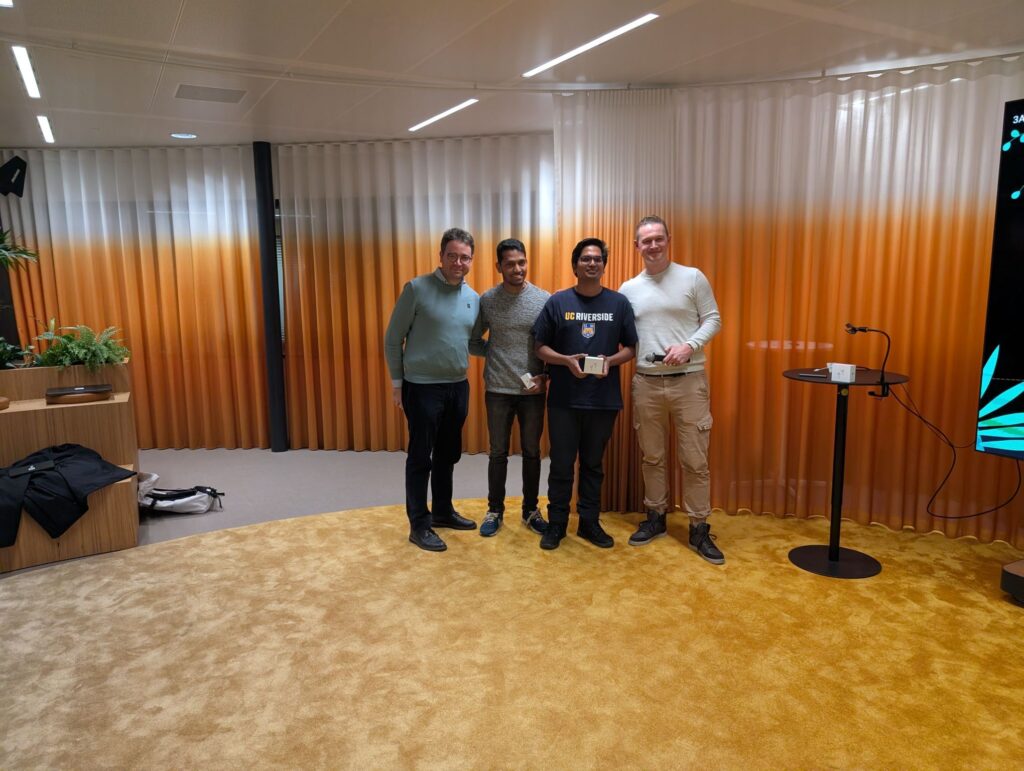
The team used ElevenLabs for the conversational piece, Anam for the avatar infrastructure, bolt.new to deploy, and Miro to map out the user flow and coordinate their work. That last part matters more than it sounds. When you’re racing against time, you need to see the full picture and iterate fast without losing track of decisions.
“Having all relevant information in a single workspace significantly helped us utilize the time effectively, limited unnecessary navigation, and helped the team stay focused under time pressure. From a product perspective, the template acted as both a guide and a constraint to control our thoughts, which was especially useful in a fast-paced setting.”
Ankush Yadav, Data Science and Strategy Consulting
And this pattern is not unique — collaboration, iteration, and experimentation allow you to learn more from a three-hour scramble than from a month of theoretical planning.
Where Miro fits in
All participants got free access to Miro with a workspace built specifically for hackathon workflows, with structures for brainstorming, mapping technical architecture, designing user flows, and prepping presentations.
To help teams start ideating earlier, ElevenLabs gave them access to Miro space before the event.
“We loved the idea of having a collaborative AI space where teams could brainstorm, ideate and align before the hackathon kicked off. Given the time constraints of the hackathon itself, this ensured ideation could be done in advance and participants could spend most of their time building during the event.”
Imogen Mulliner, Growth at ElevenLabs (and head of their global hackathon)
The product value showed up in speed. Teams brainstormed in one corner of a board, used AI to generate diagrams in another, prototyped interfaces, and built pitch decks, all in the same workspace. No tool switching. No “wait, where did we make that decision?” The manual coordination work that usually bogs down tight timelines got offloaded to AI and visual tools.
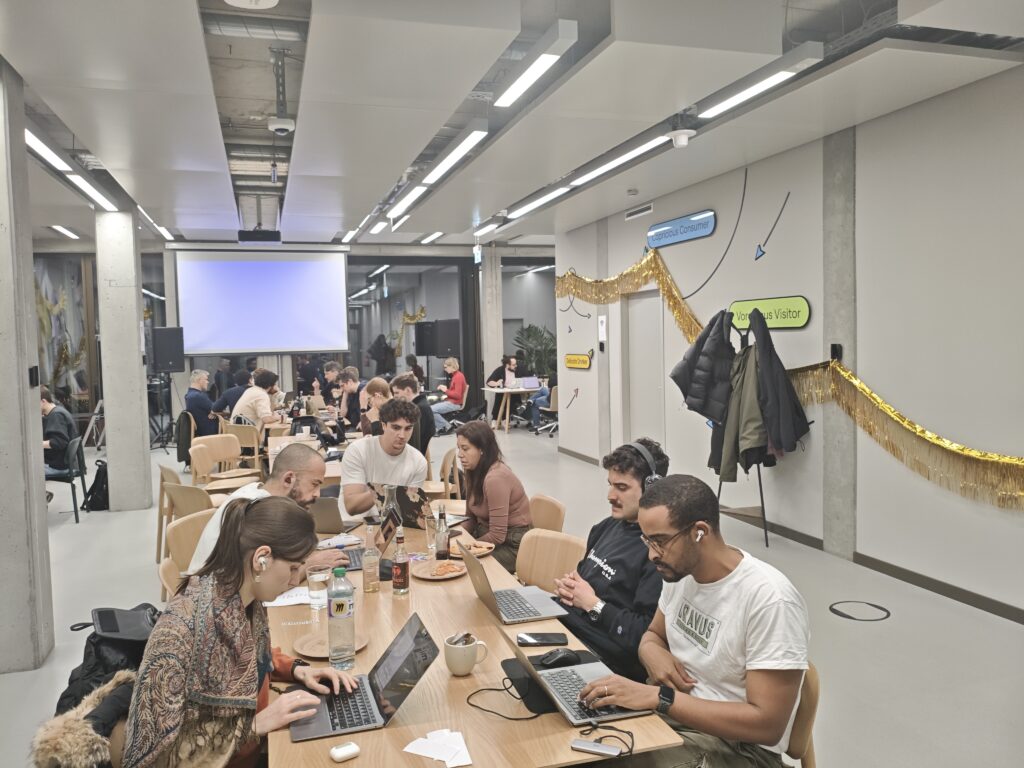
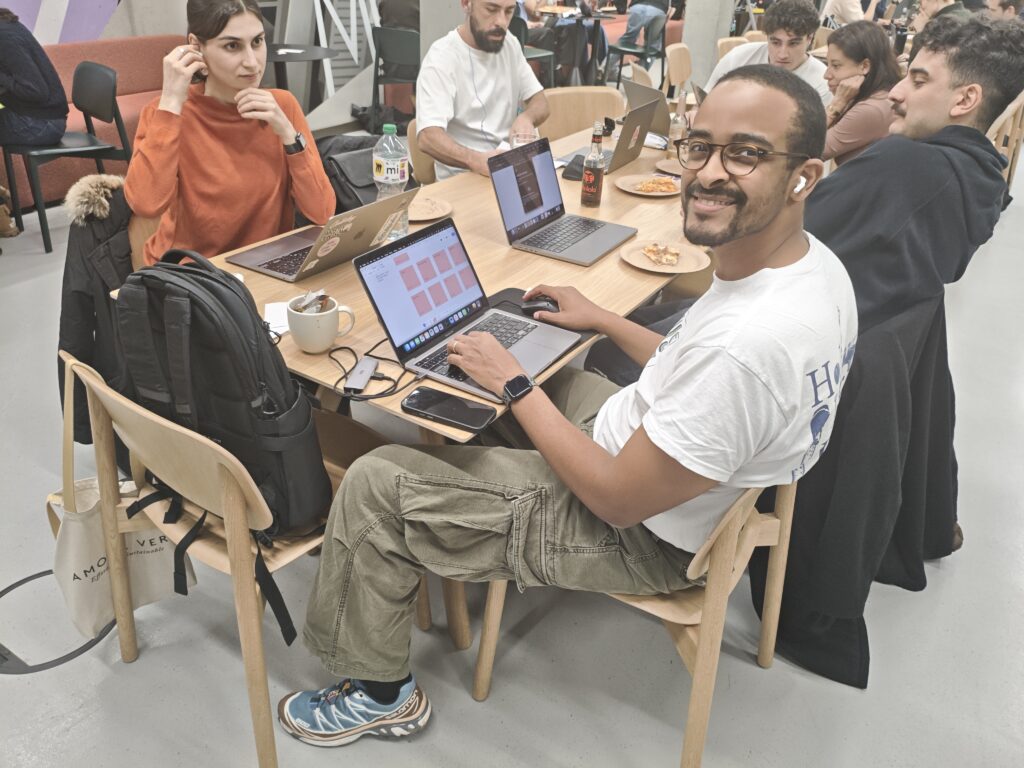
But Miro’s involvement goes beyond just providing software licenses. We supported this event because it aligns with what we’re trying to do: empower teams to create the next big thing, faster. Supporting 1,000+ builders and partners like ElevenLabs to experiment and iterate in real-time is putting resources behind the belief that speed and collaboration matter, and that conversational AI can solve real problems.
One challenge, 33 different approaches
From Tel Aviv to São Paulo, Singapore to Dublin, teams took wildly different approaches to tackling the same challenge. Some built accessibility tools. Others created educational assistants or customer service automation. The common thread: everyone used conversation as the interface.
Projects were judged on whether they actually worked, technical complexity, innovation, real-world impact, and how well they embodied the conversational agent theme. Prizes included Apple AirPods, Stripe credits, and, for the global winner, dinner with ElevenLabs’ founding team in London plus a spot presenting at their summit.
But most participants weren’t there just for prizes. They showed up to build something, to test their skills under pressure, and to see what’s possible with current AI tools. That motivation — the pure desire to make something real — drives a lot of good product development that never happens because teams get stuck in process.
What this means for teams
If you’re leading a team, hackathons like this offer a blueprint. Not that you need to run three-hour sprints (though you could). But the principles translate:
- Give people tools that speed up the manual work. Easy-to-use automation tools, APIs, vibe-coding tools, visual collaboration platforms.
- Create focused time where teams can build without interruption. The coordination overhead and context switching that kills momentum in most organizations largely disappears when everyone’s working on the same thing at the same time.
- Support experimentation. Most innovation happens when teams have permission to try things that might not work. The ElevenLabs hackathon gave 1,000+ people a structured space to experiment. Some of those experiments will turn into real products.
We’re living our mission by supporting hackathons and buildathons across the globe. If you are interested in organizing one, learn more here and get access to our free Miro AI Hakcathon toolkit.