2likes
48uses
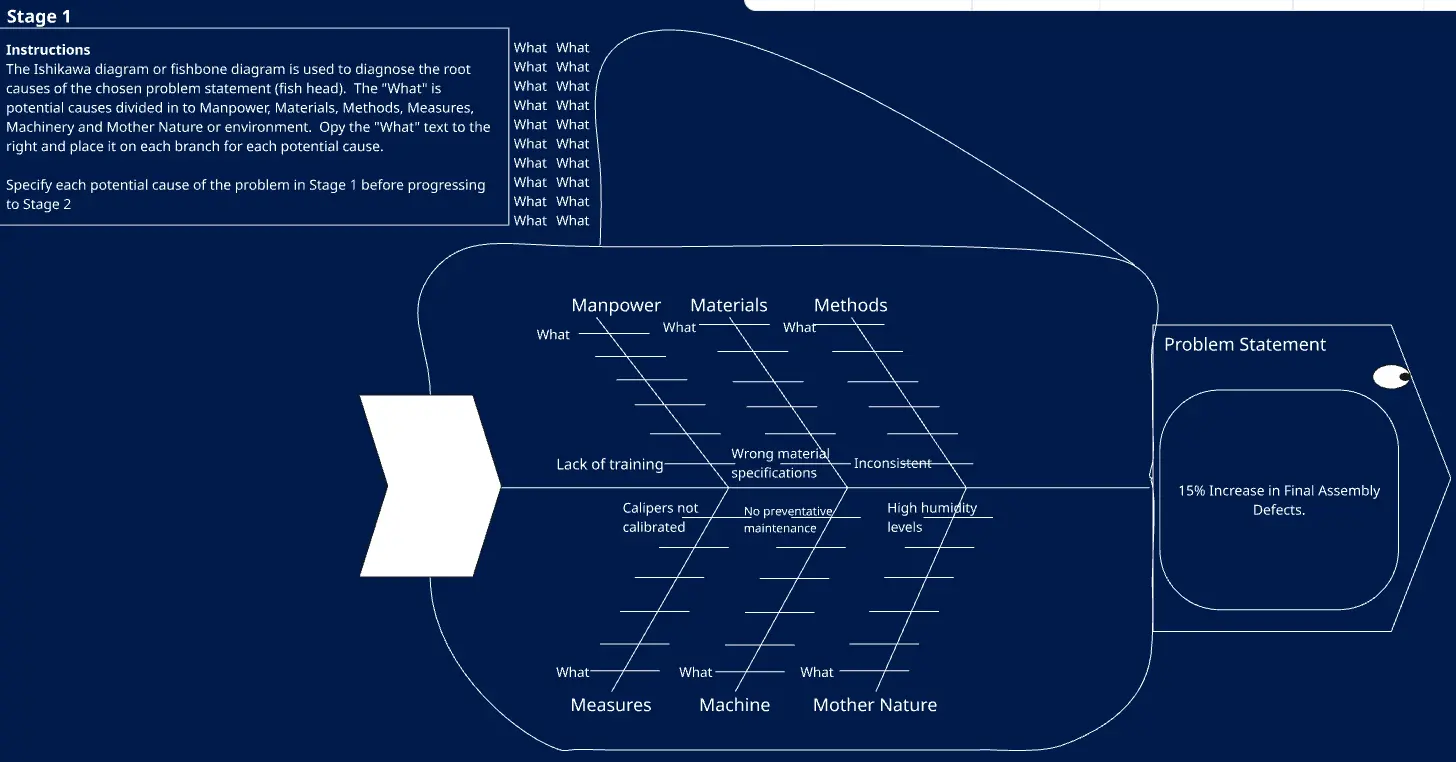
The Root Cause of Emotions Method Map turns a deep self-inquiry technique into one visual, repeatable board. It rests on a premise that reframes everything: an emotion is not a reaction to an event — it's a reaction to a loss of meaning. Every strong feeling quietly defends either a person's self-esteem or their identity, and most adult habits — overworking, avoiding, people-pleasing, proving, procrastinating — are survival patterns built on old emotional wounds. This map walks a person from a surface reaction down to the root motive driving it, exposes the hidden contradiction keeping the loop alive, and returns the one thing the pattern stole: the freedom to choose a response. I built it because most "mindset" tools stop at the symptom. This one is root-cause analysis applied to the inner world — find the real driver, and the reaction loses its grip.
Built for consultants, coaches, facilitators, and mentors who guide others through personal-depth work — and equally powerful for solo practitioners working on themselves. It runs one-to-one (one person guides, one explores), inside a coaching session, or entirely alone. No clinical training required; the structure does the heavy lifting. You bring honesty and good questions.
Reach for it when a reaction keeps repeating and no one can say why; in 1:1 coaching when a client is stuck behind a fear, a block, or a story they can't shake; before or after a high-stakes moment (a pitch, a confrontation, a launch, a milestone birthday); in leadership and emotional-intelligence work; or any time "why does this keep happening to me?" deserves a real answer instead of another affirmation. A full pass takes roughly 30–60 minutes.
How to use it
Work left to right along the color-coded spine, filling the green Working Template as you go.
Pick one charged, unpleasant emotion and the earliest, most specific moment it attaches to.
Root Cause — three questions move you from the surface fear to the meaning or identity that was lost.
Label — retell the moment in the third person, then name the verdict the person pinned on themselves ("a loser," "unneeded," "weak").
Filters — run it through Fact, Label, Interpretation, Exposure, and Pattern to separate what happened from the story laid over it.
Survival Pattern — name what the person does to survive the feeling (hide, go quiet, prove, procrastinate, disappear).
Root Motive — ask "for the sake of what?" five or six times, until you hit bottom.
Base Contradiction — collide the first motive with the last to surface the absurd loop driving the pattern ("I dim myself to shine").
Disidentification — say the core sentence across four widening levels until it reads as a mechanism, not as a self.
Land on the Outcome and choose a counter-pattern practice — one small act that deliberately does the opposite.
A color-coded 7-step algorithm, a Core Theory and Key Concepts reference, a blank Working Template to fill each session, a fully worked example so you see exactly what a completed pass looks like, a Counter-Practice branch, a Related-Methods map (laddering, ACT cognitive defusion, Byron Katie's "The Work," logotherapy, schema therapy, Five Whys), and a short Use-With-Care note.
A note on care: this is a structured thinking and reflection tool, not therapy, diagnosis, or treatment. If the work surfaces something heavy, pause and seek support from a licensed professional. Treat every label as a hypothesis to test, never a truth to confirm.
Created by Mark V. Smetanin — Serial Entrepreneur.

Mark V. Smetanin
Product Portfolio Director @ CHM inc.
E-commerce, AdTech, SalesFunnels, ShortTermRentals, Property Management, SAAS, Communication models, API, Payments, Fintech.
Fishbone Diagram for Root Cause Analysis
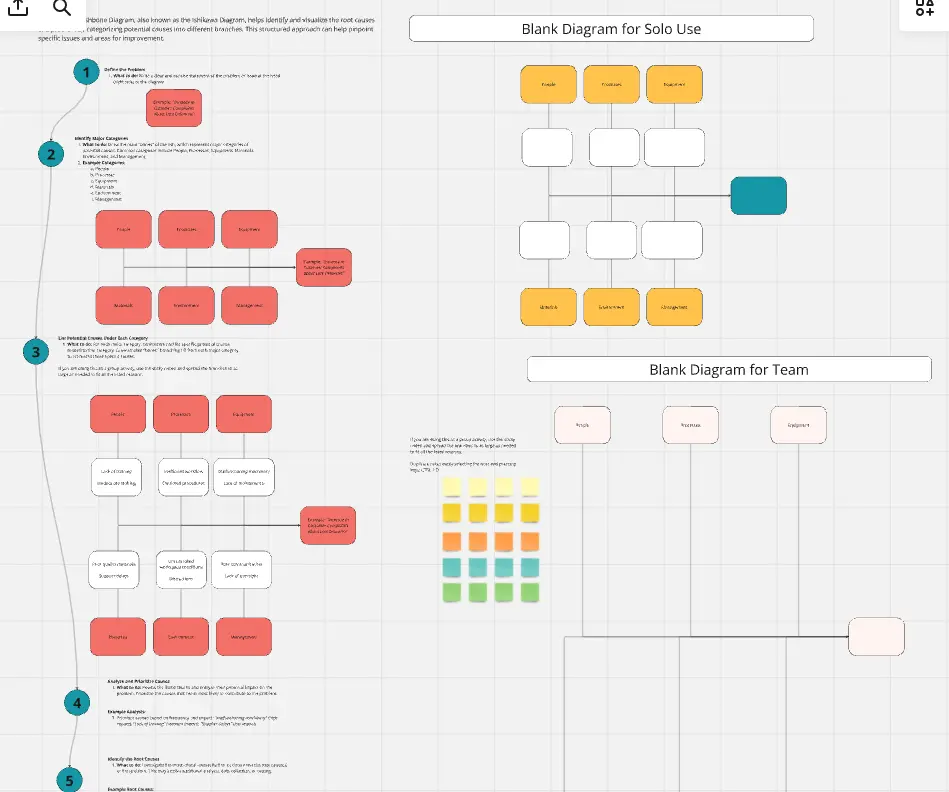
The Fishbone Diagram for Root Cause Analysis template helps identify and analyze the underlying causes of a problem. It visually breaks down issues into categories, such as people, processes, and equipment, to uncover root causes. Perfect for teams aiming to solve problems systematically, enhance processes, and prevent future occurrences. Ideal for brainstorming and collaborative analysis sessions.
Fishbone Diagram for Root Cause Analysis
The Fishbone Diagram for Root Cause Analysis template helps identify and analyze the underlying causes of a problem. It visually breaks down issues into categories, such as people, processes, and equipment, to uncover root causes. Perfect for teams aiming to solve problems systematically, enhance processes, and prevent future occurrences. Ideal for brainstorming and collaborative analysis sessions.